
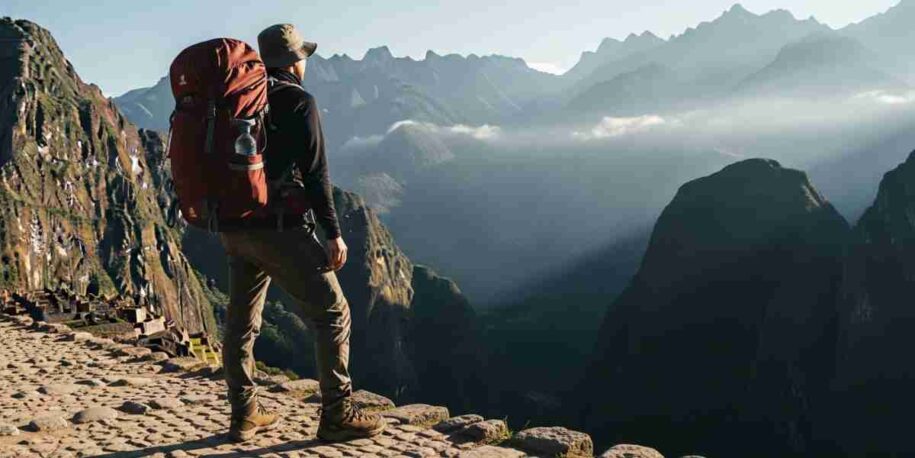
Most luxury travel agencies sell you a fairy tale of seamless conquest, but they hide the most uncomfortable truth about the Andes: the mountains do not care about your net worth, your fitness level, or your corporate title. In our last 500 expeditions, we’ve observed that the high-net-worth traveler often arrives with a «managerial» mindset, attempting to dictate terms to the atmosphere, only to be humbled by the first 3,400-meter breath in Cusco. The reality of trekking here isn’t about «conquering» a trail; it’s about a forced physiological and psychological surrender that breaks your ego before the Sun Gate can ever rebuild it.
Altitude sickness in Peru is a transformative ego-reset that uses barometric pressure to strip away modern pretension, forcing elite travelers into a state of raw vulnerability and ancestral connection. This biological «hard reset» facilitates a rare clarity, shifting the focus from external achievement to internal presence and Quechua-inspired reciprocity.
The 3,000-Meter Mirror: When Success Meets Soroche
Our guides’ altimeters show a consistent pattern: the psychological «break» usually happens at 3,200 meters. This is where the metallic chill of the granite and the thin, crisp air begin to dictate your pace. You might be a marathoner in London or a CEO in New York, but at Dead Woman’s Pass, your biology is the only resume that matters. We’ve seen world-class athletes gasp for air while grandmothers from the Sacred Valley glide past with bundles of firewood. It is the ultimate equalizer.
This isn’t just physical discomfort; it’s a lesson in Ayni—the Quechua principle of labor reciprocity. When you can no longer carry your own weight, you learn the profound humility of depending on our porters. You stop being a «client» and start being a human being. The smell of burning eucalyptus from a nearby hut or the earthy, bitter taste of hand-pressed Muña tea becomes more valuable than any 5-star amenity. You are being stripped down to your essence.
Field Notes from our Guides: We often notice that travelers who resist the slow pace of the Andes suffer the most. The mountains demand a rhythmic, meditative step. Once a traveler stops checking their smartwatch and starts syncing their breath with the stride of the lead porter, the altitude sickness often subsides, replaced by a state of ‘Andean flow.’
| The Ego’s Agenda | The Andean Reality |
|---|---|
| Control and rigid scheduling | Surrender to weather and trail flux |
| Individual peak performance | Interdependence and Ayni (Reciprocity) |
| Transactional experiences | Transformative spiritual immersion |
| Conquering the terrain | Respecting the Apus (Mountain Spirits) |
The Alchemy of Thin Air: Survival as a Spiritual Practice
As you move through the vertical ecology of the cloud forest, your world shrinks. The complex anxieties of the «real world» cannot survive at 4,000 meters; they require too much oxygen. What remains is the tactile reality of the path: the exact lithic architectural joints of Inca paving stones, the damp mist clinging to your GORE-TEX, and the rhythmic clack of trekking poles. This sensory anchoring is what we call «The Survival Hook.» By focusing entirely on the next step, you achieve a level of mindfulness that years of meditation apps couldn’t provide.
- Physiological Humility: Your body’s forced adaptation to lower oxygen levels creates a natural «ego-dampening» effect, quieting the prefrontal cortex.
- Cultural Immersion: Witnessing the strength of our Quechua team provides a direct masterclass in human resilience and community-first living.
- 💡 Elite Tip: Do not fight the headache with sheer willpower; use the first 48 hours in the Sacred Valley to hydrate with local infusions and practice «box breathing» to alkalize your blood before the ascent.
The Post-Trek Evolution: Returning with a New Blueprint
When you finally stand at the Sun Gate, watching the dawn light hit the citadel, the «you» that started the trek is gone. You haven’t just seen a wonder of the world; you’ve survived a confrontation with your own limits. The luxury isn’t in the high-thread-count sheets at the sanctuary lodge afterward—though we certainly provide those—it’s in the quiet confidence of knowing you can thrive when the world is stripped back to its bones. This is the legacy of the trail: a recalibrated perspective that views challenges back home as mere «small hills» compared to the passes of the Andes.
The Architecture of a Managed Transformation
The transition from corporate burnout to Andean clarity requires more than just a map; it requires a logistical safety net that allows you to fail safely and grow deeply. Are you ready to stop managing the chaos and finally delegate your logistics to our elite Cusco team to secure your private expedition?